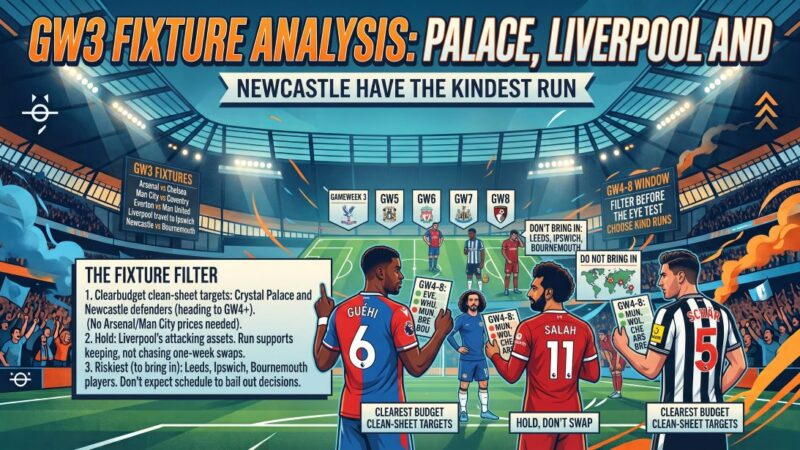
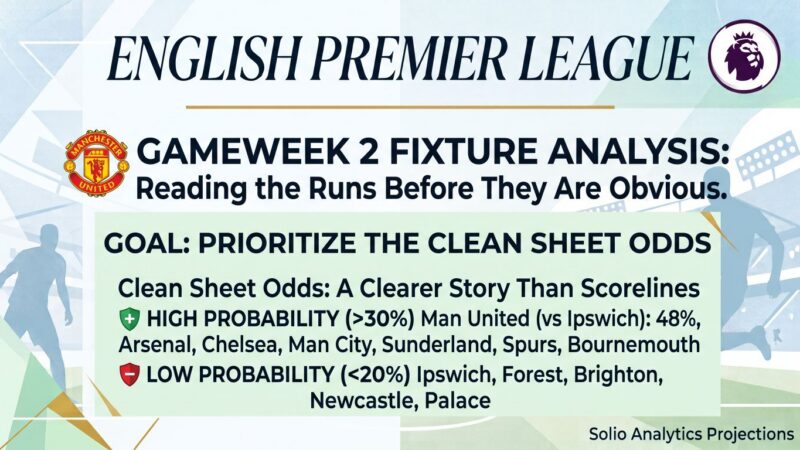
📅 Gameweek 38 Fixture Analysis
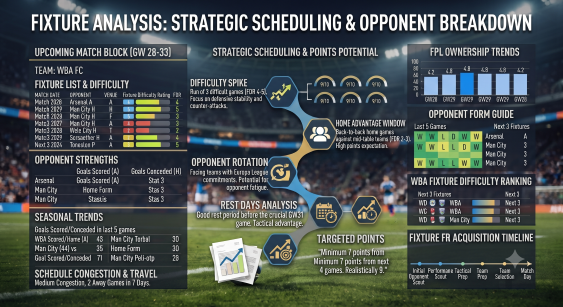
The colour-coded fixture ticker. Every FPL manager’s favourite spreadsheet. Green means good, red means bad, and yellow means you’ll spend 40 minutes convincing yourself it’s basically green.
Here’s how to actually use fixture data without fooling yourself.
What FDR is — and what it isn’t
The official Fixture Difficulty Rating is based on a complex algorithm processing Opta data variables along with each team’s home and away form over the past six matches, and is reviewed weekly. It gives you a number from 1 to 5. Lower is easier. That’s the whole idea. FPL Copilot
The problem is what it doesn’t tell you. FDR treats Arsenal at home and Arsenal away as the same difficulty, ignores style matchups, can’t account for rotation risk, and has no idea who’s taking set pieces. A team rated FDR 4 might be a genuinely tough match for most sides, or it might be a team running on fumes after a midweek European game against a backline missing their first-choice centre-back. The number won’t tell you that. Deadline-day team news will. FPL Dashboard
Using FDR alone is like picking a restaurant by postcode. It narrows the field but doesn’t pick the meal. FPL Dashboard
Attacking vs defensive — treat them separately
This is where most casual managers get it wrong. They check the fixture ticker, see a green run, and load up on a team’s players regardless of position. But what’s a green fixture for a striker isn’t always a green fixture for a defender, because different opponents are vulnerable in different ways.
The official FPL FDR doesn’t differentiate between attacking and defensive difficulty, but a team may score a lot and concede a lot, or be poor in attack and solid at the back. Tools like Premier Fantasy Tools and FPL Form run separate ratings for each — well worth bookmarking for a fuller picture. AllaboutFPL
For defensive assets specifically, clean sheet probability drops from around 45% against weak attacks to just 18% against elite forwards. That gap is enormous in FPL terms. A clean sheet bonus alone is worth four points — the difference between a decent week and a frustrating one for your backline. LuxuryFootball
The fixture swing — spot it early
Here’s the real edge. Not identifying green fixtures, but spotting when a team is about to enter them before everyone else does.
By the time most managers notice a team has three consecutive easy fixtures, ownership has already risen 15-20%, killing the template advantage. Building positions two to three gameweeks before fixture swings materialise is where the edge actually lives. That means looking six or seven gameweeks ahead when planning transfers, not just next weekend. AllaboutFPL
The managers who consistently climb ranks aren’t reacting to last week’s hauls. They’re already three moves ahead, quietly picking up a £5.5m midfielder from a team with four greens incoming while the rest of the field is panic-buying whoever just scored twice on Saturday.
Home advantage is real, but don’t overweight it
Home teams average 0.4 to 0.6 more goals per match and keep clean sheets 15% more often. So when two players look equal on paper, the one with a home fixture this week tips the balance. Worth noting, not obsessing over. AllaboutFPL
Double and blank gameweeks — plan for them now
The fixture calendar for double and blank gameweeks is usually visible weeks in advance, even if the official announcement comes later. Build your squad with those in mind. FDR doesn’t flag blank or double gameweeks — you need to check the FPL calendar separately. Missing a double because you didn’t realise a player had two fixtures is one of the more avoidable FPL crimes, and there are many. FPL Dashboard
The fixture ticker is a starting point. The real work is what you layer on top of it.